What Is ISO Certification in the UAE: Costs, Standards, and Steps (2026)
Mar 13, 2026
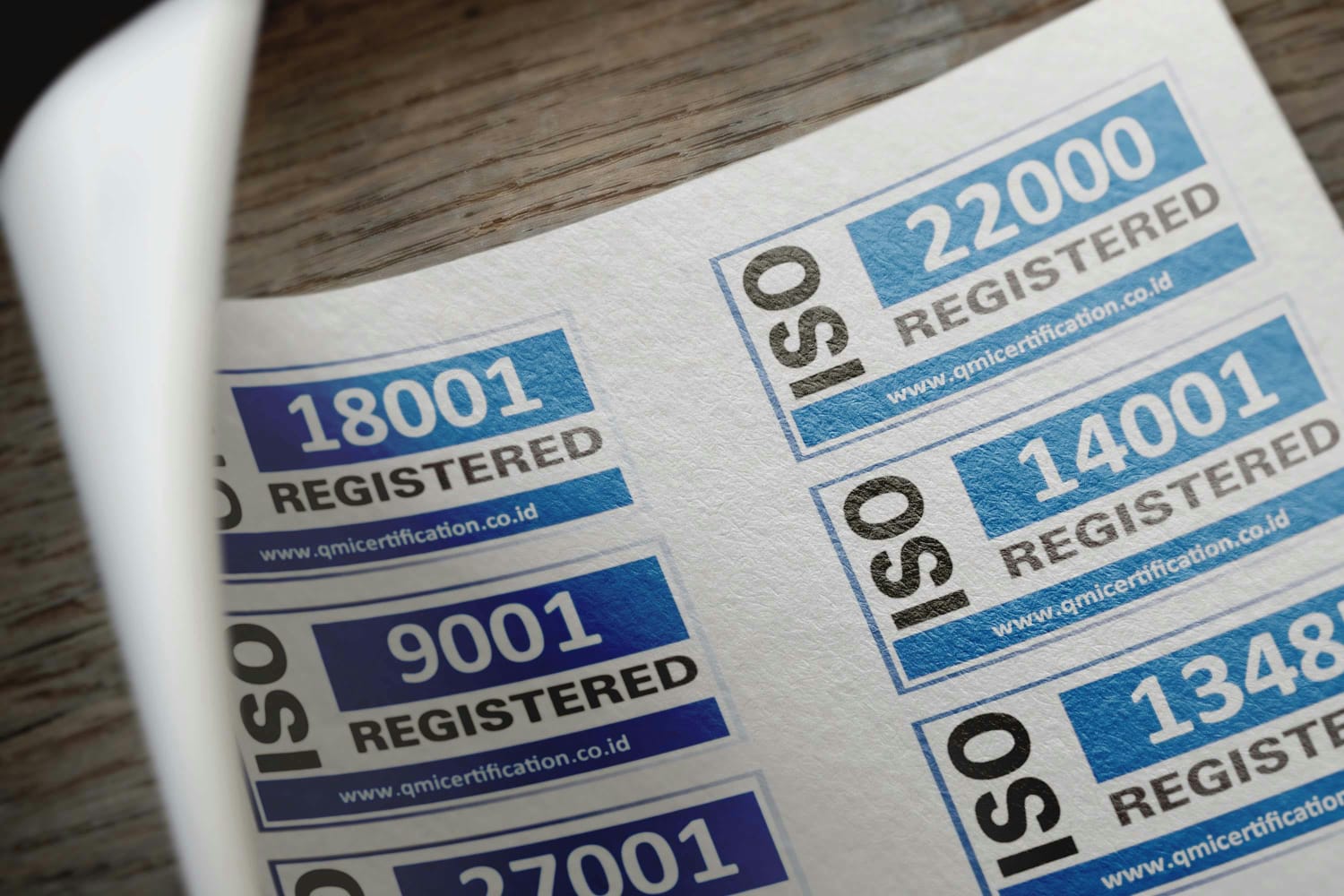
ISO certification is a globally recognised standard that demonstrates a company’s commitment to quality, safety, efficiency, and best practices. Businesses of all sizes are increasingly pursuing ISO certification to improve operational performance, enhance customer confidence, and meet international compliance requirements.
Understanding this certification, its benefits, costs, standards, and the process involved is essential for companies aiming to compete locally and globally. In our guide, we provide a clear overview on costs, steps, and standards for UAE-based businesses considering ISO certification in 2026.
What Is ISO Certification?
ISO stands for the International Organisation for Standardisation, an independent, non-governmental body that develops international standards across industries. ISO standards provide a framework for organisations to ensure consistent quality, safety, and efficiency.
Having an ISO certification confirms that your company adheres to international standards and has implemented processes that meet specified criteria. This not only covers products and services but also operational procedures, management systems, and continual improvement practices.
Common ISO Standards for UAE Businesses
Different ISO standards apply to varying operational areas. Companies typically select the certification that best matches their industry requirements and internal management systems.
ISO 9001: Quality Management Systems
As the most widely adopted ISO standard globally, ISO 9001 focuses on improving product and service quality by establishing structured processes, documentation, and continuous improvement practices.
Businesses implementing ISO 9001 typically strengthen:
Consistent internal processes that reduce operational errors
Customer satisfaction through structured feedback and improvement cycles
Documentation and reporting systems that support quality assurance
Clearer responsibilities and accountability across departments
ISO 14001: Environmental Management Systems
ISO 14001 helps organisations manage their environmental impact and operate more sustainably. It provides a structured framework for monitoring environmental performance and reducing operational risks related to waste, emissions, and resource usage.
Companies implementing ISO 14001 often focus on:
Reducing environmental impact across operations and supply chains
Improving compliance with environmental regulations and reporting requirements
Managing waste, energy usage, and resource consumption more efficiently
Strengthening sustainability commitments for clients and stakeholders
ISO 45001: Occupational Health and Safety
ISO 45001 establishes a framework for managing workplace health and safety. The standard encourages organisations to identify hazards early, reduce risks, and create safer working environments for employees and contractors.
Through ISO 45001, organisations aim to:
Identify potential safety hazards before incidents occur
Reduce workplace injuries and operational risks
Improve employee awareness and safety training
Create structured safety procedures and emergency response plans
Other Relevant ISO Certifications
Depending on the industry, businesses may pursue additional certifications to address specific operational areas or regulatory expectations.
Examples Include
ISO 27001: Information security management for protecting sensitive data and IT systems
ISO 22000: Food safety management across production and supply chains
ISO 50001: Energy management systems that improve efficiency and reduce costs
Which Businesses in the UAE Need ISO Certification?
ISO certification is not legally required for most businesses in the UAE, but it is strongly recommended or contractually required in many industries.
Companies in sectors such as construction, oil and gas, manufacturing, logistics, and engineering services frequently pursue ISO certification because clients and regulatory bodies expect it as proof of operational standards.
Smaller companies and startups can also benefit from ISO certification. Implementing structured management systems early helps businesses scale more effectively while maintaining quality and compliance.
Industry | Common ISO Certifications |
Construction | ISO 9001, ISO 45001 |
Oil and Gas | ISO 9001, ISO 14001, ISO 45001 |
Manufacturing | ISO 9001, ISO 14001 |
IT and Technology | ISO 27001 |
Food and Hospitality | ISO 22000 |
Why It Matters
ISO certification offers tangible benefits for businesses in the UAE. Each benefit contributes to operational success, regulatory compliance, and market competitiveness.
Enhanced Credibility
Being ISO-certified signals to clients, partners, and investors that a company follows international best practices. This recognition increases trust, strengthens professional reputation, and can improve opportunities in competitive markets.
Operational Efficiency
By standardising processes, ISO-certified businesses minimise errors and optimise workflow. This leads to faster project completion, better resource management, and smoother coordination across departments.
Regulatory Compliance
Many ISO standards align with local UAE regulations and international requirements. Certification helps businesses meet legal obligations more easily, reducing the risk of fines or operational restrictions.

Competitive Advantage
ISO certification can be a deciding factor in tendering and contracting, particularly for multinational clients. Companies with certified systems often enjoy easier access to global markets and higher client confidence.
Customer Confidence
Certification demonstrates a commitment to consistent quality and safety. This reassures customers that products or services meet international standards, improving satisfaction, loyalty, and long-term relationships.
Steps to Obtain Your ISO Certification in the UAE
Achieving ISO certification involves a structured, multi-stage process. Following each step carefully ensures compliance and reduces the risk of delays or audit failures.
Identify the Right ISO Standard
The first step is to determine which ISO standard aligns with your business objectives. ISO 9001 focuses on quality management, ISO 14001 on environmental management, and ISO 45001 on occupational health and safety. Companies may pursue multiple standards depending on operational needs.
Conduct a Gap Analysis
Next, assess current processes against the requirements of the chosen ISO standard. This involves identifying areas of non-compliance and opportunities for improvement, providing a roadmap for the certification process.
Develop and Implement Systems
Once gaps are identified, businesses should document and implement the required procedures, policies, and workflows. This includes creating manuals, checklists, and training programmes for staff to ensure adherence to standards.

Perform an Internal Audit
An internal audit evaluates whether implemented systems meet the ISO standard requirements. It helps identify weak points, procedural errors, or areas needing adjustment before the official certification audit.
Engage a Certification Body
After internal compliance is confirmed, companies must engage an accredited ISO certification body in the UAE. The body conducts a formal audit to verify that the organisation’s systems comply with ISO standards.
Maintain and Improve Your Systems
ISO certification is not a one-time event. Companies must continually monitor, evaluate, and improve processes. Regular reviews and updates ensure that systems remain compliant and effective, maintaining certification over time.
Processing Timeline
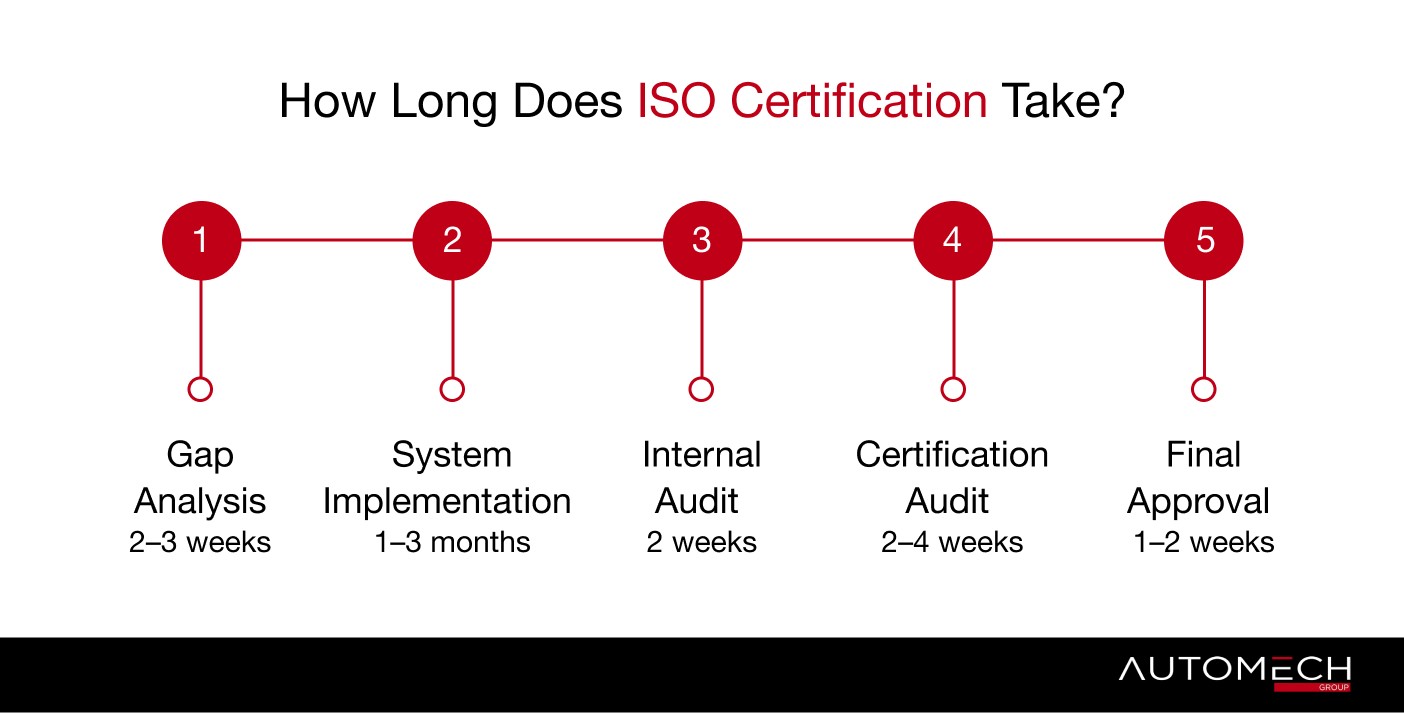
The amount of time it takes to process your ISO certification mainly depends on the size of the organisation, the complexity of its operations, and how prepared the company is before starting the process.
For many small and medium-sized businesses, certification can take three to six months. Larger organisations with multiple departments or operational sites may require additional time to align processes, documentation, and employee training.
Several factors influence how quickly a company can obtain certification:
The type of ISO standard being implemented
The number of employees and operational departments
Existing documentation and management systems
Scheduling availability of certification auditors
Tip: Conducting a gap analysis early in the process typically helps complete certification faster because you can identify compliance issues before the official audit begins.
Choosing an Accredited ISO Certification Body in the UAE
ISO itself does not issue certifications. Instead, independent certification bodies perform audits to verify that a company meets the requirements of the chosen ISO standard.
Selecting the right certification body is important because it determines whether the certification will be recognised internationally and accepted by clients, regulators, and partners.
Some reputable certification bodies operating in the UAE include:
BSI Group (British Standards Institution): widely recognised for ISO 9001, ISO 14001, and ISO 45001.
TÜV SÜD Middle East: experienced in quality, environmental, and occupational safety certifications.
DNV (Det Norske Veritas): known for ISO 9001, ISO 14001, ISO 50001, and risk management certifications.
SGS UAE: provides auditing and certification services across multiple industries and ISO standards.
When selecting a certification provider, consider:
International accreditation and recognition
Experience working with their specific industry
Transparent audit processes and documentation requirements
Credibility within the UAE market
Working with a reputable certification body ensures the certification carries genuine credibility and supports long-term compliance.
Common Challenges Businesses Face and How to Solve Them
While ISO certification offers clear benefits, organisations can face challenges during implementation. Recognising these early can help you plan effectively and ensure a smoother certification process.
Incomplete Documentation
ISO standards require clearly documented procedures, policies, and records. Companies often underestimate the effort needed to create these from scratch.
Solution: Conduct a thorough gap analysis, assign dedicated staff to documentation, and use templates or guidance from consultants to streamline the process.
Employee Adoption
Certification requires consistent adherence to new procedures, which can be challenging if staff are not fully trained or engaged.
Solution: Provide clear training, communicate the importance of ISO standards, and involve staff in developing and reviewing procedures.
Internal Audits and Continuous Improvement
Many businesses focus only on the certification audit and overlook ongoing internal audits and process improvements.
Solution: Schedule regular internal audits, document findings, and implement corrective actions to maintain compliance and prepare for future certification renewals.
Choosing the Wrong Certification Body
Selecting a certification provider that is not internationally accredited or lacks experience in your industry can reduce credibility and cause delays.
Solution: Research certification bodies carefully, check their accreditations, read client reviews, and ensure they have UAE-specific experience.
Cost Overview of ISO Certification in the UAE
Understanding the costs of ISO certification can help you plan effectively and align resources with certification goals. Prices ocan vary widely depending on company size, the chosen ISO standard, operational complexity, and whether external consultancy support is required.
Below is an overview of typical costs to you a clear picture:
Company Size | Typical ISO Standards | Estimated Cot (AED) | Notes |
Small SME | ISO 9001 | 15,000 to 25,000 | Fewer employees, simpler operations, fewer audit days |
Medium SME | ISO 9001, ISO 14001 | 25,00 to 35,000 | May require consultancy support for documentation and training |
Large Company | ISO 9001, ISO 14001, ISO 45001 | 40,000 to 50,000 | Multiple sites, departments, or complex operations increase costs |
Consultancy Support | Any standard | 5,000 to 20,000 | Optional; accelerates process and reduces audit risk |
Annual Maintenance | Any standard | 5,000 to 10,000 | Includes surveillance audits and updates to systems |
Setting the Standard for Excellence
More than just a badge of compliance, an ISO certification in the UAE reflects an organisation’s commitment to consistent quality, operational efficiency, and responsible practices. Companies that adopt international standards can improve processes, reduce risks, and strengthen trust with clients and partners.
For organisations seeking to navigate certification smoothly, understanding the standards, preparing documentation, and selecting accredited certification bodies are key steps to achieving measurable benefits.
We support companies in navigating the entire ISO certification journey. From helping you understand which standard fits your operations, to connecting you with accredited certification bodies, and providing guidance on documentation and process alignment, we ensure your business is prepared to achieve and maintain ISO standards.