Aluminium Alloys: Properties and Uses in Metal Fabrication
Dec 5, 2025
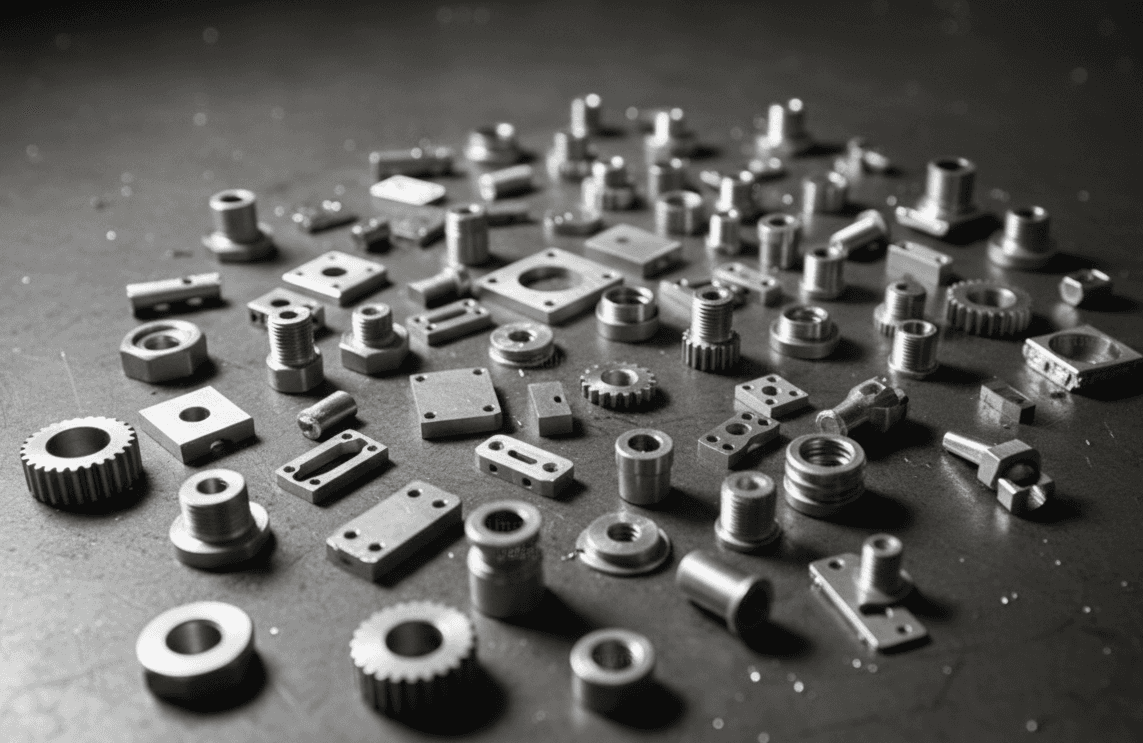
Aluminium fabrication is among the most typical forms of fabrication across industries, playing a very important role, especially in modern manufacturing, construction, and precision engineering. Aluminium stands as one of the most extensively utilised metals throughout multiple industries, which include oil and gas, marine, construction, and heavy transport, because of its lightweight properties and corrosion resistance and versatile applications.
Aluminium exists in multiple forms because it consists of different grades and compositions, which manufacturers create as aluminium alloys to deliver various mechanical properties. The different aluminium alloy types, together with their specific applications, help businesses of all sizes to choose the most suitable materials for their production projects, which need long-lasting strength and operational efficiency.
Let’s explore how aluminium alloys are classified, their types, their key properties, and where they are commonly used in metal fabrication.
How Aluminium Alloys Are Classified
Aluminium alloys are categorised into series according to their main alloying elements. The elements are added to pure aluminium to improve its strength, corrosion resistance, and ability to be welded and machined.
The most typical classification system uses a four-digit series that assigns a different alloy family to each digit. This system enables engineers and fabricators, and other professionals in metal fabrication, to identify material properties together with their suitability for multiple industrial applications.
Classification of Aluminium Alloys | ||
Aluminium Alloy Series | Main Alloying Element | Key Characteristic |
1000 | Pure aluminium (99%+) | Excellent corrosion resistance |
2000 | Copper | High strength |
3000 | Manganese | Good formability |
4000 | Silicon | Low melting point |
5000 | Magnesium | Strong and corrosion-resistant |
6000 | Magnesium + Silicon | Balanced properties |
7000 | Zinc | Very high strength |
Types of Aluminium Alloys
1000 Series: Pure Aluminium
The 1000 aluminium alloy series consists of no less than 99% pure aluminium, which makes it one of the most corrosion-resistant aluminium types available. Due to its absence of significant alloying components, it provides outstanding electrical and thermal conductivity, making it ideal for specialised industrial and electrical uses.
The 1000 series of aluminium alloys allows for straightforward shaping and cutting, and welding work, but their mechanical strength remains weaker than that of other aluminium alloys. The material sees limited use in structural aluminium fabrication, but it serves as a common choice for chemical processing equipment, electrical components and food-grade containers, which require hygienic and corrosion-resistant properties instead of strength.
2000 Series: Aluminium-Copper Alloys
The 2000 aluminium alloy series is primarily alloyed with copper, significantly increasing its strength and hardness. These alloys are known for their excellent machinability and ability to withstand high mechanical stress, making them suitable for demanding engineering environments.
The inclusion of copper decreases corrosion resistance, which implies that these alloys frequently need surface treatments or protective coatings. In aluminium fabrication, the 2000 series is frequently utilised for aerospace structures, automotive parts, and high-performance machinery components where structural durability is essential.
3000 Series: Aluminium-Manganese Alloys
The 3000 aluminium alloy series uses manganese as an addition to enhance strength while preserving the alloy's ability to be shaped and its resistance to corrosion. The alloys provide a combination of performance and manufacturing simplicity, which makes them suitable for operations that require shaping and bending of materials.
The 3000 aluminium alloy series is widely used in construction and architectural fabrication, including roofing sheets, wall panels, storage tanks, and heat exchangers. This series is particularly suitable for projects that require moderate strength with consistent surface quality.
5000 Series: Aluminium-Magnesium Alloys
The 5000 aluminium alloy series is alloyed with magnesium, giving it excellent strength and corrosion resistance, especially in marine and industrial environments. These alloys perform well in humid, coastal, and chemically exposed conditions.
Because of the high weldability and durability of the 5000 aluminium alloy series, they are commonly used in aluminium fabrication for ship structures, pressure vessels, fuel tanks, offshore platforms, and industrial walkways.
6000 Series: Aluminium-Magnesium-Silicon Alloys
The 6000 aluminium alloy series combines magnesium and silicon, offering one of the most balanced aluminium alloy families. These aluminium alloys provide good strength, excellent corrosion resistance, and outstanding machinability, making them extremely versatile.
The aluminium alloy series finds extensive application in aluminium fabrication because it serves as a structural frame material, an architectural system component and an industrial machine part and an automotive vehicle element and especially satisfies the needs of precision engineering through its cutting and welding and automated manufacturing properties.
7000 Series: Aluminium-Zinc Alloys
The final series of aluminium alloys is the 7000, known for providing the greatest strength among these alloys due to zinc being the main alloying component. These alloys are engineered for high performance where structural integrity is essential.
The 7000 aluminium alloy series shows lower corrosion resistance when compared to other series, yet it finds extensive application in aerospace structures, military equipment and heavy transportation systems. The industry uses these alloys in aluminium fabrication to create high-stress components that require maximum strength.
Key Properties of Aluminium Alloys
Strength
Aluminium alloys can achieve high tensile strength depending on their composition, allowing them to support structural loads while remaining significantly lighter than steel.
Corrosion Resistance
The majority of aluminium alloys naturally develop a protective oxide layer, aiding in rust prevention and making them appropriate for outdoor, marine, and industrial settings.
Lightweight
Aluminium weighs roughly one-third as much as steel, lowering structural weight and enhancing efficiency in construction and transportation projects.
Machinability
Aluminium alloys are easy to cut, drill, and shape, which supports high-precision fabrication and automated manufacturing processes.
Weldability
Many aluminium alloys, particularly 5000 and 6000 series, can be welded efficiently, enabling strong joints without compromising material performance.
Different Uses of Aluminium Alloys in Metal Fabrication
Manufacturing
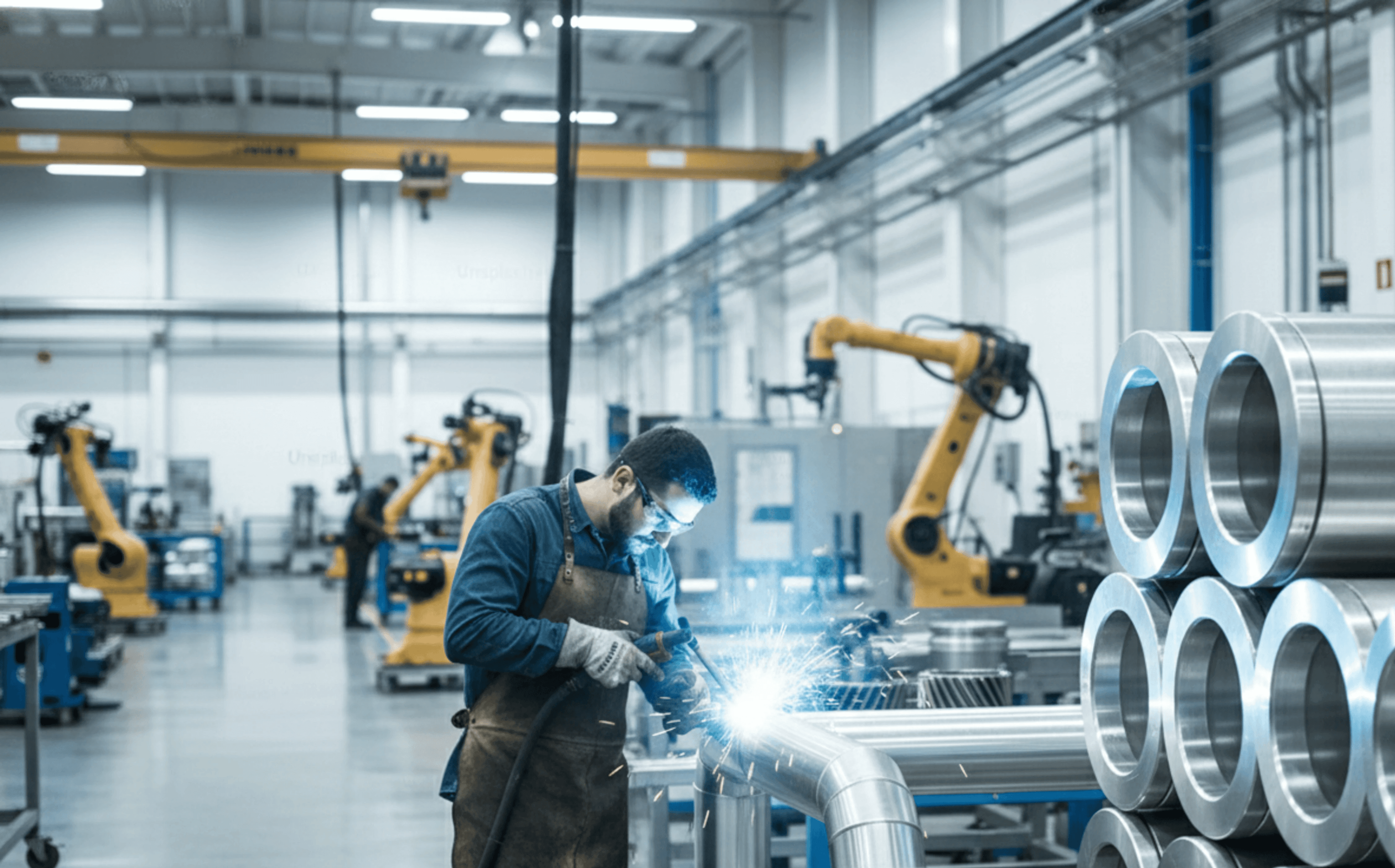
Across Dubai and globally, aluminium alloys are commonly utilised in various manufacturing industries to create machine parts, enclosures, structural frameworks, and equipment casings. Their strength and machinability render them perfect for creating precision components utilised in mechanical systems and industrial automation.
Construction
Aluminium fabrication is widely used in construction for structural systems, railings, support beams, and façade components. The lightweight nature of aluminium reduces installation load while maintaining durability and long-term structural integrity.
Marine Industry
Marine fabrication relies heavily on corrosion-resistant aluminium alloys for ship hulls, offshore platforms, walkways, and marine equipment. These alloys perform well in saltwater environments, reducing maintenance requirements and extending service life.
Architecture
Architectural aluminium fabrication is used to create decorative panels, curtain walls, shading systems, and interior structures. Aluminium allows designers to achieve complex shapes without sacrificing strength or surface quality.
Heavy Transportation
In heavy transportation, aluminium alloys are fabricated into frames, containers, and support systems for trucks, railways, and industrial vehicles. Their lightweight properties improve fuel efficiency and load capacity.
Advantages and Disadvantages of Aluminium Fabrication
Advantages | Disadvantages |
Lightweight and strong | Lower strength than steel in some grades |
High corrosion resistance | Can be more expensive than mild steel |
Easy to machine and form | Requires skilled welding techniques |
Excellent for automation | Not ideal for extreme heat |
Recyclable and sustainable | Some alloys need surface treatments |
Understanding Aluminium Fabrication
Aluminium fabrication enables businesses to manufacture precise, high-quality components through their manufacturing process. The material of aluminium enables complex industrial designs to be implemented through various processes, including cutting, machining, welding, and assembly, which all function at optimal performance levels.
At Automech Group, aluminium fabrication is supported by advanced machining, heavy fabrication, heat treatment, and coating services. With in-house precision engineering and site installation capabilities, Automech delivers unified solutions for industries such as oil and gas, mining, marine, and construction.